
Hour 1:
“Police found Sumagang asleep in a car in a remote rural area. Sangco’s deceased body was lying on top of him.”
People-v.-Sumagang-2021-h044023.pdf
Cargill Sues under maritime and admiralty jurisdiction
Here is the Complaint
Cargill-v.-M_V-Xing-He-Hai-in-rem-and-COSCO-Shipping.pdf
Such a nice lady. Fifteen to life.
No early release for her.
People v. Myles 2021-a161450.pdf
“We recognize this conclusion breaks with over four decades of established law. … however, after closely reexamining the statutory construction employed . . .”
Li-v.-Super.-Ct.-CA-2021-c092584.pdf
Lawyers, Guns, and Money.
Folsom Police Dept. v. M.C. - 2021-c091173.pdf
Hour 2 – Part 1
Malice, malum prohibitum, malum in se, natural law, and marijuana
ANGELO_v._UNITED_STATES_OF_AMERICA-.pdfHour 2 – Part 2
If I told you, I’d have to kill you.
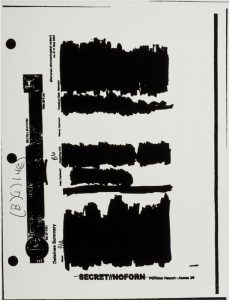
We have all seen the objections to our discovery that read, “blah blah . . . on the grounds that it is overly broad, unduly burdensome, and not reasonably calculated to lead to discovery of admissible evidence.”
We take discovery for granted. We think we are having a tough time getting what we want, but imagine being accused of a crime and fighting for our liberty.
From, State v. Ross, 792 So. 2d 699 (Fla. App., 2001) August 31, 2001
Disent. We disagree. Although there is no constitutional right to discovery in a criminal case, see Young v. State, 739 So.2d 553, 559 (Fla. 1999), criminal defendants do have a right to pretrial discovery under Florida Rule.
Mandatory disclosure is built into the rules for the federal process of discovery. This requires parties to provide,
[A] list of the documents or, in the case of voluminous documentary information, a list of the categories of documents, known by a party to exist whether or not in the party’s possession, custody, or control and which that party believes may be relevant to the subject matter of the action, and those which appear reasonably calculated to LEAD TO the discovery of admissible evidence, and the date(s) upon which those documents will be made, or have been made, available for inspection and copying . . .
The ultimate factor for any target of discovery is relevance. Redactions and the throttling of production is the respondent’s effort to determine the relevance of a paper or answer for the requesting party. Let’s examine this.
Rule 26(b)(1) now states that parties to a case “may obtain discovery regarding ANY NONPRIVILEGED matter that is RELEVANT to any party’s CLAIM OR DEFENSE and proportional to the needs of the case.” This new proportionality standard is considered in light of six factors:
1) the importance of the issues at stake in the action,
2) the amount in controversy,
3) the parties’ relative access to relevant information,
4) the parties’ resources,
5) the importance of the discovery in resolving the issues, and
6) whether the burden or expense of the proposed discovery outweighs its likely benefit.
Discovery scenario. What if you sued by a competitor? You have to solve a problem. Below are a few cases to form our understanding.
Half of the federal courts take this position
From, In re Takata Airbag Prods. Liab. Litig., MDL No. 2599, 2016 WL 1460143 (S.D. Fla. Mar. 1, 2016), we see:
Defendants claimed “without irrelevance redactions, they would have to produce copious amounts of information, potentially disclosing competitively sensitive information with no bearing on this case.” Id. at *2.
But, “[d]espite the protective orders in this case, Defendants worry that this competitively sensitive information will be disclosed, perhaps to their competitors, perhaps to the media.” Id.
The Takata ruling cites U.S. Supreme Court Chief Justice Roberts’ comment to Rule 26:
It “crystalizes the concept of reasonable limits on discovery through increased reliance on the common-sense concept of proportionality,” and that a party is NOT entitled to discovery of “every piece of relevant information.”
and,
“[a]s the Chief Justice’s comments highlight, a party is not entitled to receive every piece of relevant information. It is only logical, then, that a party is similarly not entitled to receive every piece of irrelevant information in responsive documents if the producing party has a persuasive reason for why such information should be withheld.”
This court found:
“that disclosing such information could provide [their] competitors with competitively sensitive information to the ultimate detriment of each Defendant.”
Half the federal courts take the opposite position
IDC Financial Publishing Inc. v. BondDesk Group LLC, et al., Case No. 15-cv-1085 (PP), 2017 U.S. Dist. LEXIS 177626 (Oct. 26, 2017), concerned allegations of copyright infringement. The Wisconsin court granted the Plaintiff’s motion to compel the production of over 600 unredacted documents by Defendant TradeWeb Market that had extensive redactions.
The court was concerned that the redaction of irrelevant information invites the “potential for abuse.” Such redactions create mistrust.
The Courts in this camp see that changes made in 2015 to Rule 26(b)(1) now states that parties to a case “may obtain discovery regarding any nonprivileged matter that is RELEVANT to any party’s claim or defense and proportional to the needs of the case.”
The 2015 changes to the Rule 26 emphasize proportionality, the rules allow discovery of information even if it is inadmissible as evidence and that even irrelevant information within a document that contains relevant information may be highly useful to provide context for the relevant information.
“Redaction is, after all, an alteration of potential evidence” and “a party should not take it upon him, her or itself to decide unilaterally what context is necessary for the non-redacted part disclosed, and what might be useless to the case.” Evon v. Law Offices of Sidney Mickell, No. S–09–0760, 2010 WL
455476, at *2 n. 1 (E.D.Cal.2010).
“[i]t is a rare document that contains only relevant information.” Bartholomew v. Avalon Capital Group, Inc., 278 F.R.D. 441, 451 (D.Minn.2011). “irrelevant information within a document that contains relevant information may be highly useful to providing context for the relevant information.” Id.
In re State Street Bank & Trust Co. Fixed Income Funds Inv. Litig., Nos. 08–1945, 08– 333, 2009 WL 1026013, at *1 (S.D.N.Y.2009) (“[Unilateral] redactions are generally unwise. They breed suspicions, and they may deprive the reader of context.”).
In re FedEx Ground Package Sys., Inc. Emp’t Practices Litig., No. 3:05–MD–527, 2007 WL 79312, at *5 (N.D. Ind. 2007) (“Generally, the Federal Rules provide no procedural device for unilateral redaction by a party and it is a procedure that is not favored.”).
Both sets of courts recognize the split, but”
“that the better, less risky approach is not to provide litigants with the carte blanche to willy-nilly redact information … merely because the producing party concludes on its own that some words, phrases or paragraphs are somehow not relevant.” No. 13-22265-CIV-WILLIAMS/GOODMAN, 2014 WL 10979823, at *4 (S.D. Fla. Jan. 31, 2014).
And to finish the mind-bender consider your opponent is not claiming a privilege, such as attorney-client privilege or work product, consider that under Rule 34 the courts view a ‘document’ as relevant or irrelevant as a whole. Courts don’t weigh the relevance of certain sections, sentences, or words. The document is relevant or not.
Under Rule 34, if a portion of document is relevant the entirety of document is relevant.
“[h]aving produced portions of emails … BorgWarner must produce the emails without redactions.” Melchior v. Hilite Int’l, Inc., No. 13-50177, 2013 WL 2238754 (E.D. Mich. May 21, 2013)
This means that by producing a redacted document, they have admitted the relevancy of the document as a whole.
Redaction is simply part of the bigger picture. Relevancy.
So how does this apply to our Fighting the Foreclosure Machine discovery?
This is why they give us NOTHING.
I can find no caselaw showing that the evolutionary path of a Note (from the closing table to the hot little hands of the Note-Holder) is privileged, proprietary, or protected in any way.
Meaning it is fully discoverable. – Bill Johnson
There is no proprietary information, trade secret, marketing plans, customer lists, or engineering advantage.
You have the power
The rules belong to you.
There is nothing you can give them when responding to their discovery that grants them the right to enforce.
Copyright 2021. All rights reserved in print and audio content.