
The Red Amendment and its caselaw.
Do the cases support support the book’s proposition?
My position is that “The Red Amendment” is a convoluted hodgepodge of theories and quasi-legal arguments made up of miscellaneous or incongruous ideas.
In all fairness, I have taken it upon myself to create a spreadsheet of every citation to caselaw and statute in the book.
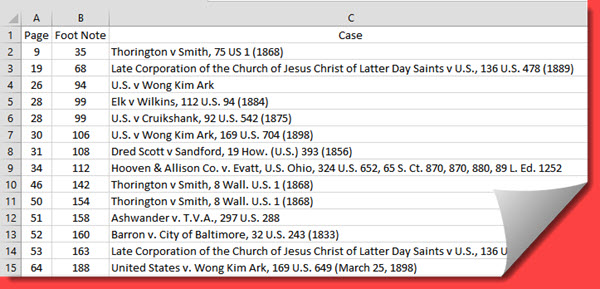
There are at least 231 caselaw citations and 130 citations to the the United States Code and Federal Regulations. A regular treasure trove.
Question:
Does the author’s choice of caselaw support his theories?
Let’s find out.
Fourteenth Amendment to the United States Constitution
The Fourteenth Amendment (Amendment XIV) to the United States Constitution was adopted on July 9, 1868, as one of the Reconstruction Amendments. Often considered as one of the most consequential amendments, it addresses citizenship rights and equal protection under the law and was proposed in response to issues related to former slaves following the American Civil War. The amendment was bitterly contested, particularly by the states of the defeated Confederacy, which were forced to ratify it in order to regain representation in Congress. . . .
The amendment’s first section includes several clauses: the Citizenship Clause, Privileges or Immunities Clause, Due Process Clause, and Equal Protection Clause. The Citizenship Clause provides a broad definition of citizenship, nullifying the Supreme Court’s decision in Dred Scott v. Sandford (1857), which had held that Americans descended from African slaves could not be citizens of the United States. Since the Slaughter-House Cases (1873), the Privileges or Immunities Clause has been interpreted to do very little.
https://en.wikipedia.org/wiki/Fourteenth_Amendment_to_the_United_States_Constitution

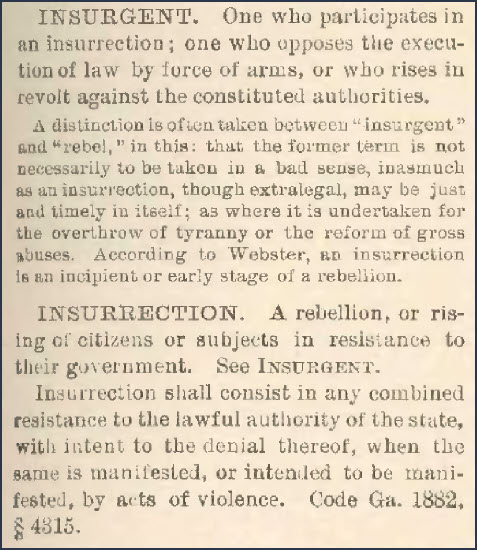
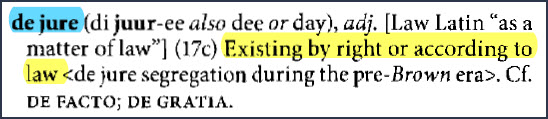
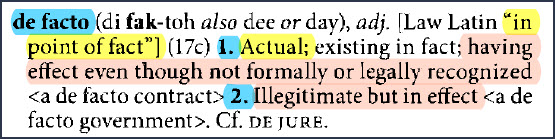
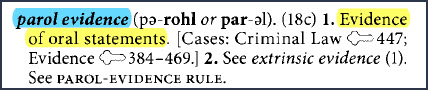
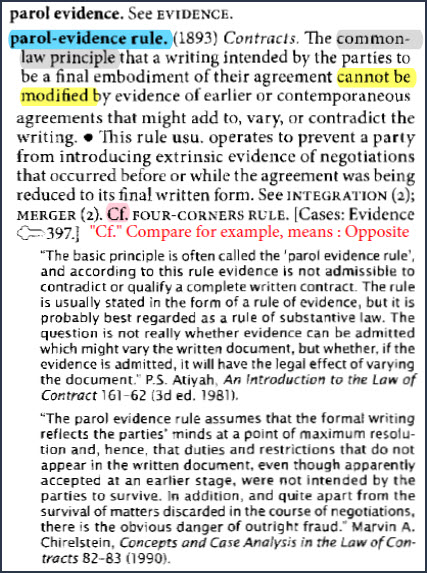
Homework.
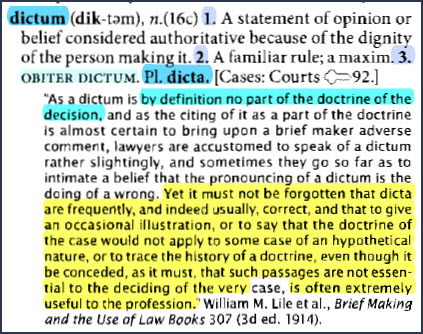
The next case we will assess is below. It is the second case cited by L.B. Bork. He pens the following:
“2.5.1 Definitions Concerning Democracy”


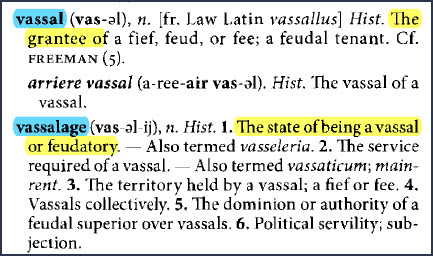
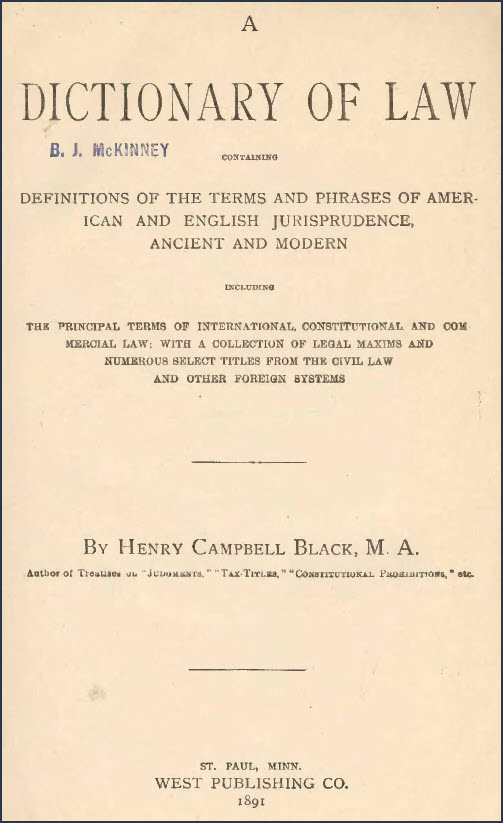
What do you think? Does this case support LB’s premise? Is it the holding, dictum, or a glancing reference? Is it good caselaw, or has it been overturned?
Music Credits
Dwight Yoakam – I Sang Dixie
https://youtu.be/UJCPnd3NDNs
Confederate Soldier Song “Johnny Reb” Johnny Horton
https://youtu.be/1ZxMDZ3TdZM
Danheim – Mannavegr (Full Album 2017) Viking Era & Viking War Music
https://youtu.be/8tilKaOINmE
Sector Space
https://sectorradio.ru/space/
Mason Proffit – Two Hangmen
https://youtu.be/CC3yZdG_2Bc
Copyright 2022. All rights reserved in print and audio content.